Tuesday, July 13, 2010

Clayoquot Sound, B.C.

Wolf tracks along west coast of Vancouver Island, British Columbia


Bald eagle above a foggy forest.


Carcass of juvenile humpback whale on beach of island in Clayoquot Sound


Racoon foraging for sand flees on beach of island in Sound


Black-tailed deer feeding on seaweed on island in Clayoquot Sound.


River otter scent marking on seaweed as tide goes out.


Black bear foraging for invertebrates in the intertidal zone by rolling rocks.


Large Sitka spruce in ancient forest on island in the Sound.


 A gray wolf trots along the beach early in the morning with ravens in the background.
West Coast, Vancouver Island


Tofino Inlet, Clayoquot Sound.


Harbor seals lounging at low tide.


Despite decades of conservation efforts, Clayoquot Sound, a UNESCO Biosphere Reserve,  faces numerous severe threats to its ecological integrity including clear cut logging of roadless old growth forests, industrial Atlantic salmon fish farms, and proposed open-pit copper mining. Learn more about the region and how you can support conservation in the region at the following websites:


Atlantic salmon fish farm in Clayoquot Sound with uncut forest in background. Several rivers with no clearcuts or roads in them are seeing massive declines in salmon numbers due to sea lice and other issues associated with fish farming in the Sound. The smell is overwhelming, far worse than a dairy farm and totally shocking in such a wild setting.


Active clearcut logging in Clayquot Sound. Top of the photo is uncut oldgrowth. Bottom is regrowth from a previous clearcut.


Growth rings: over 200. Destination: ?

Huge western red ceder stump set amidst second growth forest of planted Douglas firs. Note that the original nurse log that the ceder tree started growing on in still under the stump, attesting to the volume of biomass in the previous ancient forest and the literally centuries it took to create the structural diversity so important to many Old growth obligate species.


Friday, July 2, 2010

WILDLIFE

 
 Western heather vole (Phenacomys intermedius).
Olympic National Park, Washington.


Winter Wren with insects in its mouth bound for hungry young.
Western Washington.


Black bear.
Olympic National Park, Washington


American Pika
feeding on just sprouting larch needles
Lake Chelan-Sawtooth Wilderness, North Cascades, Washington

Male Blue grouse
North Cascades, Washington


Townsend's vole
feeding on grass
Snoqualmie Valley, Washington


Black-tailed Deer Buck
Klamath Mountains
Northwestern California


Western Grey Squirrel
feeding on acorns in an oak tree
Klamath Mountains
Southwestern Oregon


Western Jumping Mouse
Selkirk Mountains, southeastern British Columbia


Grizzly Bear on Elk carcass
North Fork Flathead River, northwestern Montan


Bull Moose
Northeast Washington


Mountain goats in mist
Goat Rocks Wilderness
Washington Cascades


Bighorn Sheep Ram
Clemens Mountain
East slope Washington Cascades

Great Egret
Bolinas Lagoon
Northern California

Saturday, June 12, 2010

Northwest People

 
Outward Bound Instructor Jacob Anderson climbing the Horsefly couloire on Reynolds Peak
Sawtooth Range, North Cascades, Washingtion.


Naturalist Marcus Reynerson inspects a black bear den discovered by David Scott who looks on along with Gabe Spence and Brian McConnell. Western Washington.


Climbing guide Forest McBrian shows off some stylin' moves.
Bellingham, Washington.


A taste of winter for Emily Gibson.
Washington Cascades.


Casey McFarland prepares goose feathers for photographing for his forthcoming text on Bird Feathers of North America (co-author David Scott).
Redmond, Washington.


Naturalist Emily Gibson inspects a marsh wren nest she discovered
Potholes, WA


Darcy Ottey on a sunny fall day in the Cascades


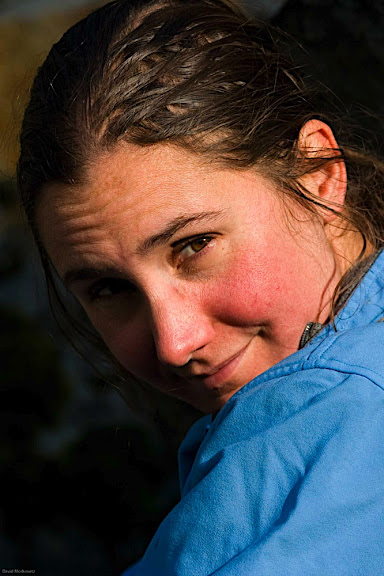
Rosa Levin taking a photograph,
North Cascades, Washington


Mountaineer Steve Smith applies sunscreen on a bright day.
Ragged Ridge, North Cascades Washington.


Forest McBrian reflects on life and love.
Nisqually Wildlife Refuge, Puget Sound Washington.


Bling Bling takes a well earned rest bellow High pass.
Glacier Peak Wilderness, Washington.


Drawing badger tracks from a plaster cast.
Vashon Island, Washington.

Tuesday, February 9, 2010

Wildlife of the Pacific Northwest


WILDLIFE OF THE PACIFIC NORTHWEST
 Tracking and Identifying Mammals, Birds, Reptiles, Amphibians, and Invertebrates


written, photographed, and illustrated by
DAVID MOSKOWITZ

A TIMBER PRESSS FIELD GUIDE
SCHEDULED FOR RELEASE ON APRIL 28, 2010

Now available. Purchase your copy through www.davidmoskowitz.net and support the author and the educational mission of Wilderness Awareness School!


Wild animals fascinate, yet are rarely seen. It is possible, though — if you know what to look for and where, and if you understand what you see — to increase your chances of wildlife sightings, whether you are far from civilization or right in your own backyard.

Wildlife of the Pacific Northwest includes illustrated descriptions for more than 180 mammals, birds, reptiles, amphibians, and invertebrates most common in Washington, Oregon, British Columbia, northern California, Idaho, and western Montana. With more than 460 photographs, hundreds of scale drawings, and more than 90 distribution maps, it belongs in every pack and is a must-have for nature lovers of all ages and skill levels.

David Moskowitz, a professional wildlife tracker, photographer, and outdoor educator, has been studying wildlife and tracking in the Pacific Northwest since 1995. He has contributed his technical expertise to a wide variety of wildlife studies regionally and in the Canadian and U.S. Rocky mountains, focusing on using tracking and other non-invasive methods to study wildlife ecology and promote conservation. David has worked on projects studying rare forest carnivores, wolves, elk, Caspian terns, desert plant ecology, and trophic cascades. He helped establish the Cascade Citizens Wildlife Monitoring Project, a citizen science effort to search for and monitor rare and sensitive wildlife in the Cascades and other Northwest wildlands.

David’s extensive experience as an outdoor educator includes training mountaineering instructors for Outward Bound, leading wilderness expeditions throughout the western United States and in Alaska, teaching natural history seminars, and as the lead instructor for wildlife tracking programs at Wilderness Awareness School in Duvall, Washington. David holds a bachelor’s degree in environmental studies and outdoor education from Prescott College. View his photography and find out about classes at www.davidmoskowitz.net.

Paperback Flexibind
Pages: 364 pp. 
Images: 464 color photos, 213 line drawings and 93 maps 

Saturday, January 30, 2010

Tracks In Snow, Winter 2009-2010


American marten (Martes americana)
left hind track
North Cascades, Washington


Gray Wolf (Canis lupus)
hind track
Northern Rockies, Montana


Mountain lion (Puma concolor)
left front track
Northern Rockies, Montana


Canada lynx (Lynx canadensis)
left front below left hind tracks
Northern Rockies, Montana


Moose (Alces alces)
hind track
Northern Rockies, Montana

PACIFIC NORTHWEST LANDSCAPES


 Ponderosa pine and hoar frost.
East slope Cascades, Washington


Kintla Lake.
Glacier National Park, Montana


Mount Shuksan and the north fork of the Nooksack river.
North Cascades, WA.


Hoar frost on snags.
North Cascades, WA.


Sunrise over Mout Redoubt.
North Cascades, Washington


Mountain stream west of Whatcom Pass.
North Cascades, Washington.


Rogers Lake and Tiffany Peak, site of the Tripod Fire.
Okanogan Highlands, north-central Washington.


Beargrass, Cornice peak
Selkirk mountains, southeastern British Columbia


Sunrise in the Selkirk mountains
northeastern Washington


Kendell Peak ridgeline,
Snoqualmie Pass, Washington Cascades


Southeastern Oregon


Balsamroot in the Tieton River Canyon
East slope Washington Cascades


Mount Baker and Mount Fury at Sunrise
North Cascades


Northern California Coast